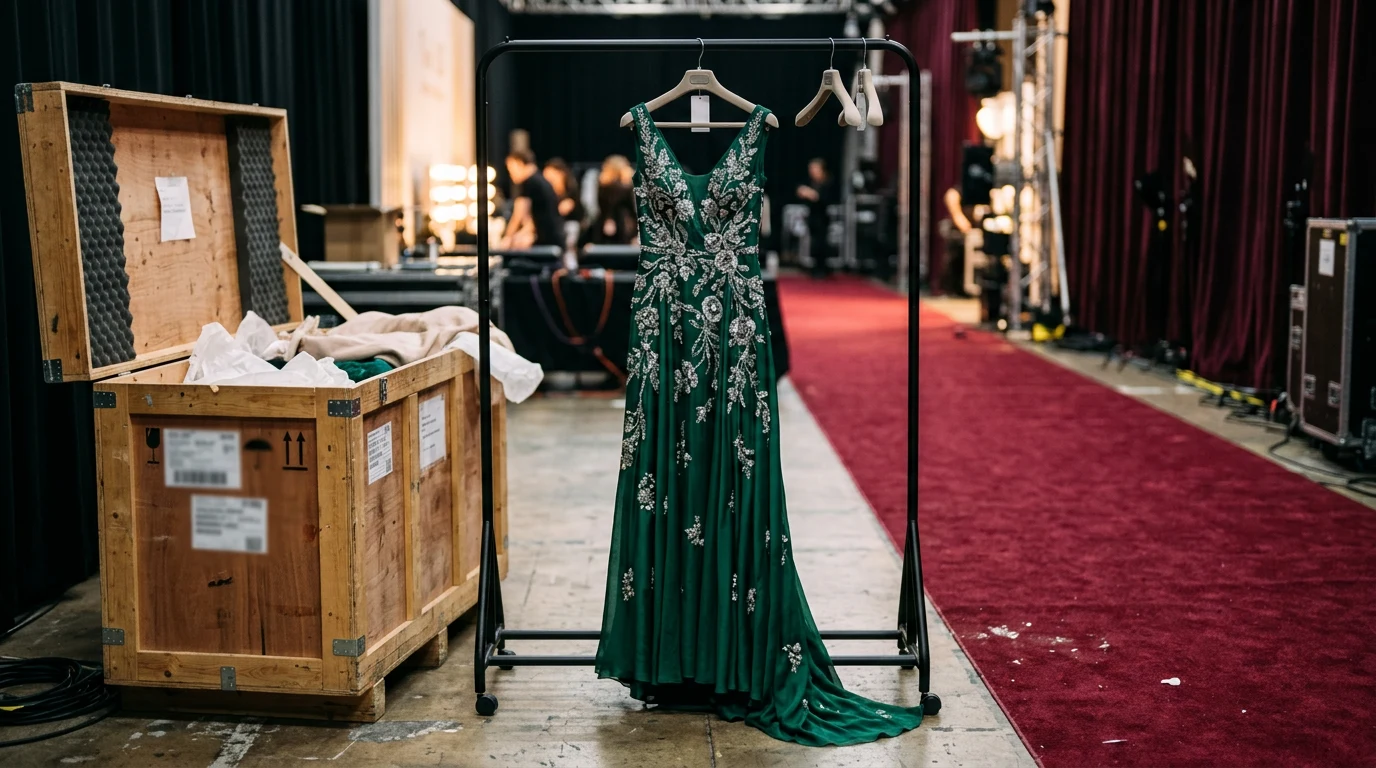
A styling credit is the formal acknowledgment that a specific person or team assembled the clothes in a photograph, on a set, or on a red carpet. It matters because credit is currency: it is how stylists book their next job, how designers claim the marketing value of a star wearing their work, and how publications settle who did what.
The rules are mostly unwritten. Guild contracts and union agreements govern pay and working conditions for many below-the-line crew, but attribution itself usually lives in custom, in the publication's masthead conventions, and in whatever the contract between stylist and client says. That gap is where most credit disputes start.
The clinic's diagnosis: styling credits look like etiquette, but they function as a ledger. Read them that way and the hierarchy becomes obvious.
What exactly is a styling credit?
At its simplest, it is a named line — "Styling: [Name]" — attached to a published image or an on-screen production. It tells the reader who coordinated the clothing, accessories, and overall visual presentation. As a working definition, Merriam-Webster treats styling as the way something is styled, and its usage examples show the term applied to everything from clothing to hair and makeup work on a movie — which is why credit lines often split those functions out separately.
The person named is doing a defined job. Fashion styling, as a career guide from the JD Institute of Fashion Technology frames it, is the coordination of clothing, accessories, footwear, makeup and props to create a specific visual message — a strategic field, not dress-up. The credit says: this person is the visual director for the clothes in this frame.
Who actually gets credited — and in what order?
Credit follows leverage and scope, roughly in this order.
- The lead stylist. The name on the line. On a major campaign or a star's awards-season run, this is the person with the client relationship and the designer contacts.
- Assistant stylists. Often credited in smaller type, in a collective "styling team" line, or not at all. Assistants do the pulling, steaming, pinning and returns — the unglamorous logistics the JD Institute guide lists as the day-to-day core of the job.
- The designer or house. Credited in the caption ("Dress by X") rather than as crew. This is a brand placement, not a labor credit, and houses negotiate hard for it because the caption is the marketing.
- Hair, makeup and tailoring. Separate lines, separate professionals. A tailor who altered a garment to fit is rarely named, though the alteration can be the difference between a look working and not.
The hierarchy is unwritten but consistent. Whoever the client hired directly sits at the top. Everyone downstream negotiates for visibility.
What does the contract actually say?
Most styling engagements are freelance deals, and the contract — when there is one — covers three things: fee, scope, and credit. The fee side is its own economy, which The Showbiz Clinic has broken down separately in How Hollywood Stylist Fees Actually Work Behind The Scenes.
Credit language typically specifies where the credit appears (on-screen credits, magazine credits block, caption), in what size, and whether the stylist's name can be used in the stylist's own portfolio and social posts. That last clause cuts both ways: clients want discretion until the look hits, stylists want the work visible because visibility is the résumé.
On film and television, the picture changes. A wardrobe stylist working a production is often covered by the production's crew agreements, and credit placement can follow the show's established credit conventions rather than a one-off negotiation. Editorial and red carpet work has no such structure — which is why the informal rules carry more weight there.
Why the designer credit is a different animal
A styling credit rewards labor. A designer credit rewards ownership. When a caption reads "Gown: [House]", the house supplied the garment — frequently on loan, frequently archive — and the caption is part of the value exchanged. The mechanics of that loan are covered in How Fashion Houses Loan Archive Pieces To Stars.
This is where the commercial logic gets sharp. A star wearing a house's design is an advertisement the brand did not buy as media, and the caption is the proof of placement. Publications know this, which is why caption credits are often negotiated as part of the shoot or event arrangement rather than decided by the writer. Our analysis: the reader should treat a designer caption the way they treat a sponsored post — accurate, but placed for commercial reasons.
What happens when credit goes missing?
The symptom is familiar: an assistant does the fittings and the pulls, the look goes viral, and the lead stylist's name is the only one attached. The industry's remedies are informal. Assistants build their own public portfolios, tag the work directly on social platforms where the credit convention is looser, and rely on the fact that the styling community — and the trade press that covers it — tracks who actually worked a job.
The structural cause is that attribution is not a legal right in most of these arrangements. Unless the contract says the assistant gets named, there is no enforcement mechanism. The practical advice for anyone starting out, supported by the JD Institute guide's framing of styling as a career ladder of distinct specializations — editorial, celebrity, commercial, personal, wardrobe — is that the assistant years are the apprenticeship, and the portfolio, not the credit line, is what converts it into lead work.
Practical steps: reading a credit block like a contract
What this means for readers and for anyone negotiating their first styling deal:
- Read the order. The first name after "Styling" is the lead. Everything below it is a hierarchy of involvement and leverage.
- Separate the labor credits from the brand credits. "Styling by" names a worker. "Wearing" names a supplier. They are different transactions.
- Check the contract before the job, not after. Credit placement, portfolio rights and social-media posting permission are all negotiable terms — and they are far cheaper to negotiate up front than to dispute after publication.
- Assume the caption was placed commercially. Especially at premieres and award shows, where the placement economics are the whole game, as covered in Why Brands Pay For Red Carpet Placement — The Media Math.
The broader context: styling credits sit inside the larger celebrity-fashion economy this desk covers across the Style section, from dressing deals to ambassador contracts. The credit line is small. The money it represents is not.
What the evidence does and doesn't establish
What is established: the definition and scope of the styling role, the standard division of labor, and the near-total absence of formal attribution rules outside production environments. What the available evidence does not establish: any standardized credit formula across publications, any typical fee split between lead and assistant, or any enforceable industry standard for assistant credit. Those gaps are the story. In an industry that quantifies everything else, attribution still runs on custom — and custom favors whoever has the leverage to write the contract.