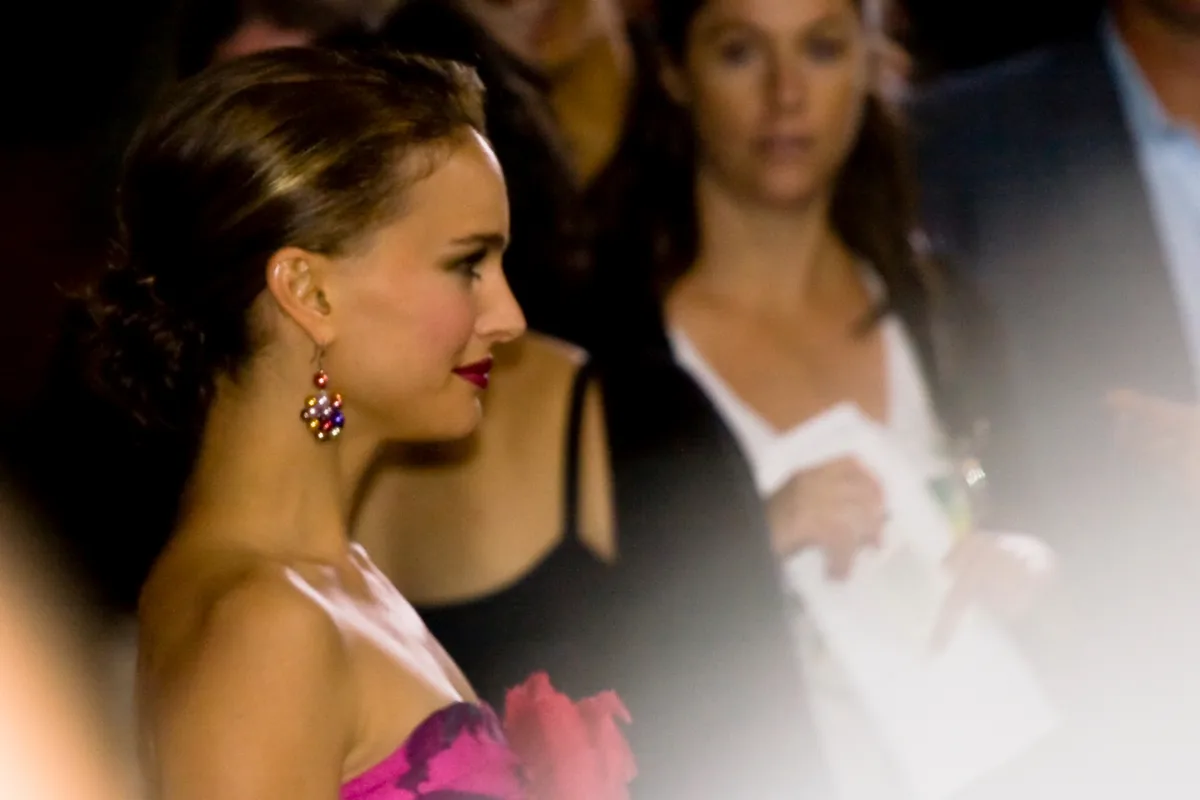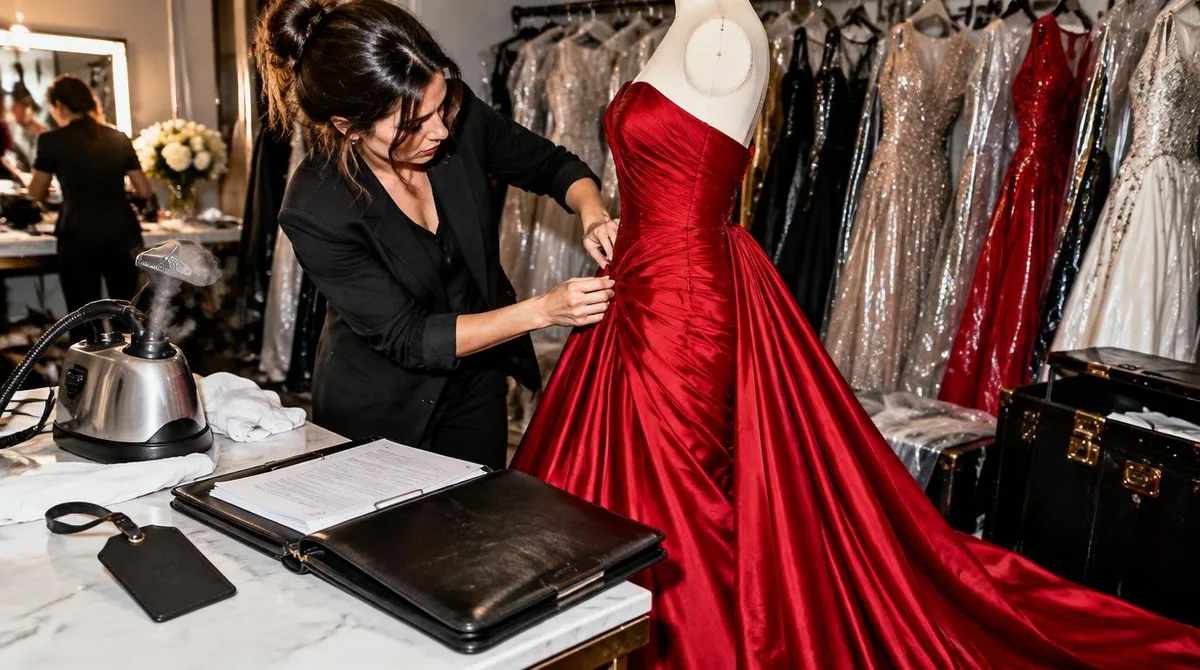
Most red carpet dresses go back. The gown a star wears to a premiere is usually a loan, and the loan agreement says when it comes home. A smaller number get archived by the house that made them. A few end up on the resale market, where a famous shoulder can add real money to a price.
The word "happens" implies chance, and The Free Dictionary defines happen as something that comes about without being planned. Nothing about a gown's afterlife is unplanned. Every path — return, archive, resale — was written into paperwork before the first camera arrived.
The commercial logic is simple. A house lends a dress for the photographs, not for the closet. What the star does with it afterward depends on clauses most readers never see. Those clauses decide whether the piece goes back, sits in a vault, or gets sold.
Who actually owns the dress on the night?
Usually nobody in the photo. The house owns it, or a showroom owns it, or a rental service owns it. The star's team borrows it for the event under a loan agreement. That agreement covers fit, alterations, insurance and the return date.
Ownership matters because it sets the obligations. A borrowed gown is treated like borrowed jewelry: it must come back in the condition it left, or someone pays. The same insurance logic that covers a loaned necklace covers a loaned gown, which is why the two often travel through the same paperwork. Our explainer on how jewelry loans and insurance work covers that side of the ledger. This connects to our earlier piece, How Red Carpet Dressing Deals Actually Work — and Who Pays.
Sometimes the star keeps the dress. That happens when the house gifts it, or when the deal is structured so the piece is part of the fee. A gift is a business decision, not a souvenir. The house is buying goodwill, a relationship, or a future favor.
Why do most gowns go back?
Because the dress has more work to do. A sample gown can be fitted to the next celebrity, sent to another market, or photographed again for a different campaign. A one-night wear is one line in a long asset calendar. Houses think in seasons, not evenings.
Return clauses also protect the archive. A gown that has been altered for one star loses value to the house. That is why many loan agreements limit alterations, or require that any changes be reversible. A hem let back down is a gown that can still work. A gown cut for one body often cannot.
The return itself is unglamorous. The stylist's team packs the piece, the showroom inspects it, and any damage gets documented. Dry cleaning is usually handled by the borrower's side, and the agreement says who pays. The whole transaction closes within days of the event.
What does the archive actually do?
An archive is a house's memory. Gowns worn to famous moments get pulled, catalogued and stored under controlled conditions. The piece may never be worn again. It becomes a reference for future collections, a candidate for museum loans, or collateral for the brand's own storytelling.
Archive pieces follow a different loan path from current-season samples. Our piece on how fashion houses loan archive pieces to stars explains why the paperwork runs heavier: the asset is irreplaceable, so the terms are stricter and the handling is tighter.
A house keeps a gown for one of three reasons. The moment was historic. The look defined a collection. Or the piece is expected to appreciate. All three reasons are commercial. Sentiment exists, but it rarely outranks the vault's inventory logic.
How does a red carpet dress reach the resale market?
Through consignment. A gown that leaves the house's hands — gifted, sold, or released by a private owner — can be consigned to a resale house that specializes in celebrity provenance. The resale house authenticates the piece, documents who wore it and when, and prices it against comparable sales.
Provenance is the product. Two identical gowns are not worth the same if one stood on a famous carpet. The resale listing leads with the event, the photographs and the wearer. The dress is the asset; the story is the markup.
Stars and their teams know this. Some consign deliberately and route proceeds to charity, which converts a closet clear-out into publicity. Others hold pieces, betting that the wearer's profile grows faster than the gown depreciates. Both strategies are common. Neither is guaranteed.
Why do some stars keep pieces?
Three reasons, in rough order of frequency. First, fit: a gown cut to the star's body has little resale or re-loan value, so the house may prefer to gift it rather than store it. Second, relationship: a kept gown deepens the bond between star and house, and the house prices that bond into future deals. Third, history: some pieces are tied to a moment the wearer wants to own.
Keeping has costs. Gowns need proper storage — climate control, padded forms, protection from light. That is a real expense for a garment that will likely never be worn again. Teams that keep pieces tend to treat them like small art collections, because that is essentially what they are.
There is also a constraint worth naming. If a star is under an ambassador or exclusivity arrangement, what she keeps and what she can later sell may be limited by that contract. Our breakdown of designer exclusivity clauses covers how those restrictions work. The gown in the closet is still, in part, the house's business.
What this means for the money
The lifecycle is a supply chain, and each stage has an owner. The house controls the loan and the archive. The stylist controls the handling and the return. The resale market controls the after-market price. The star controls almost nothing except the photographs — which is the point, because the photographs are what created the value.
The practical takeaway for anyone watching the business: when a famous gown shows up for sale, the interesting question is not the price. It is the paper trail. Who released the piece, and why. Whether it was gifted, consigned, or quietly sold. The answer tells you more about the deal behind the dress than any caption does.
What the evidence does not settle is scale. How many gowns return, how many get archived, how many hit resale — those numbers live inside houses and consignment firms, and neither publishes them. Anyone quoting a percentage is guessing. The honest diagnosis is that the market is structured, private and profitable, and the public sees only the carpet.
The takeaway
A red carpet dress is not a purchase. It is a short-term asset loaned for exposure, then routed by contract to wherever it earns the most: the next fitting, the vault, or the resale floor. The glamour is one evening. The paperwork runs for years.
And the next time a headline celebrates a look, remember the fine print decided its fate before the carpet did. That is the clinic's diagnosis: in this business, the afterlife of a dress is written before the dress is worn.