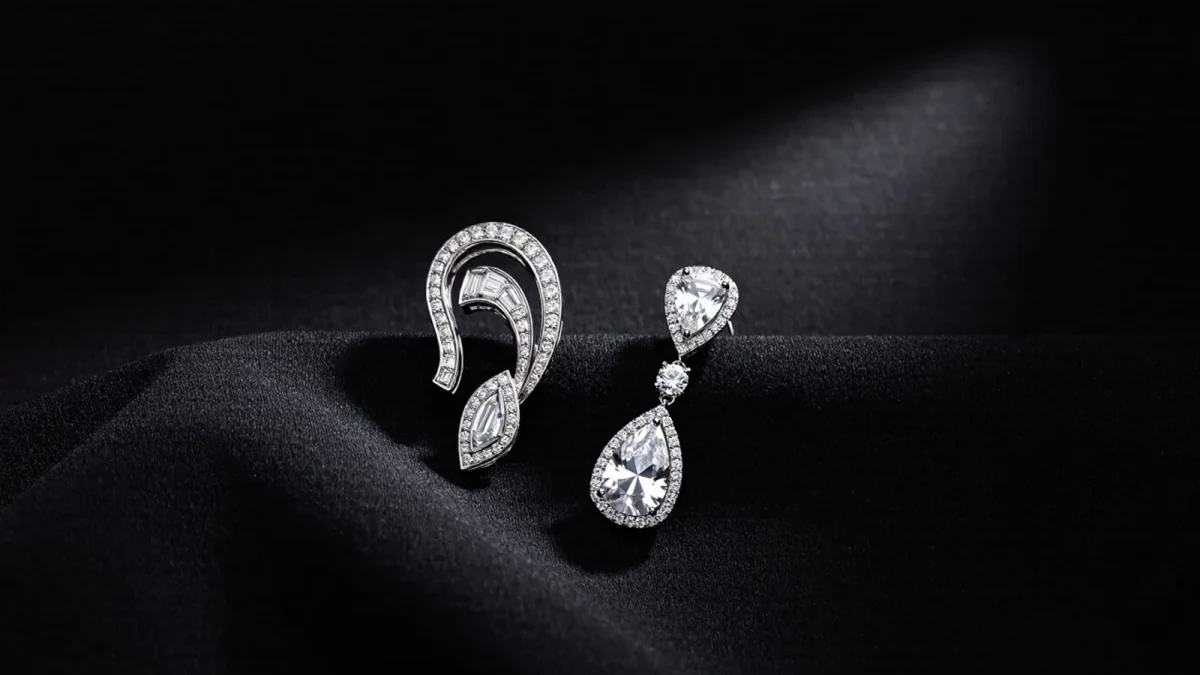
Jewelry loans and insurance work on a simple rule: the star owns none of it. High jewelry houses lend pieces valued in the millions for a single evening, transport them under armed escort and insure them under short-term policies priced against declared value, security staffing and travel route. The scale of the risk is not theoretical — the 2013 Cannes Carlton hotel heist took an estimated $136 million in Chopard jewels in broad daylight, per Reuters, 2013, still among the largest jewelry thefts ever recorded.
The business exists because a carpet photograph sells high jewelry better than any boutique window. This article publishes information about how the loan and insurance mechanics work, not insurance advice.
Who actually owns the diamonds on the carpet?
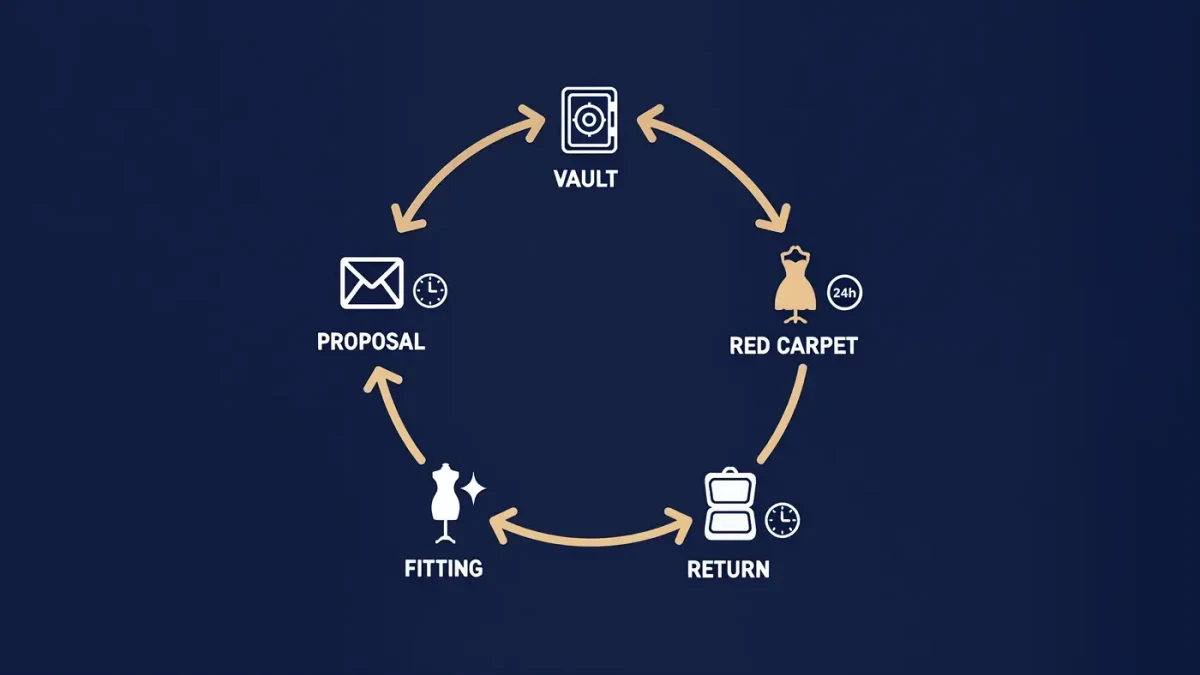
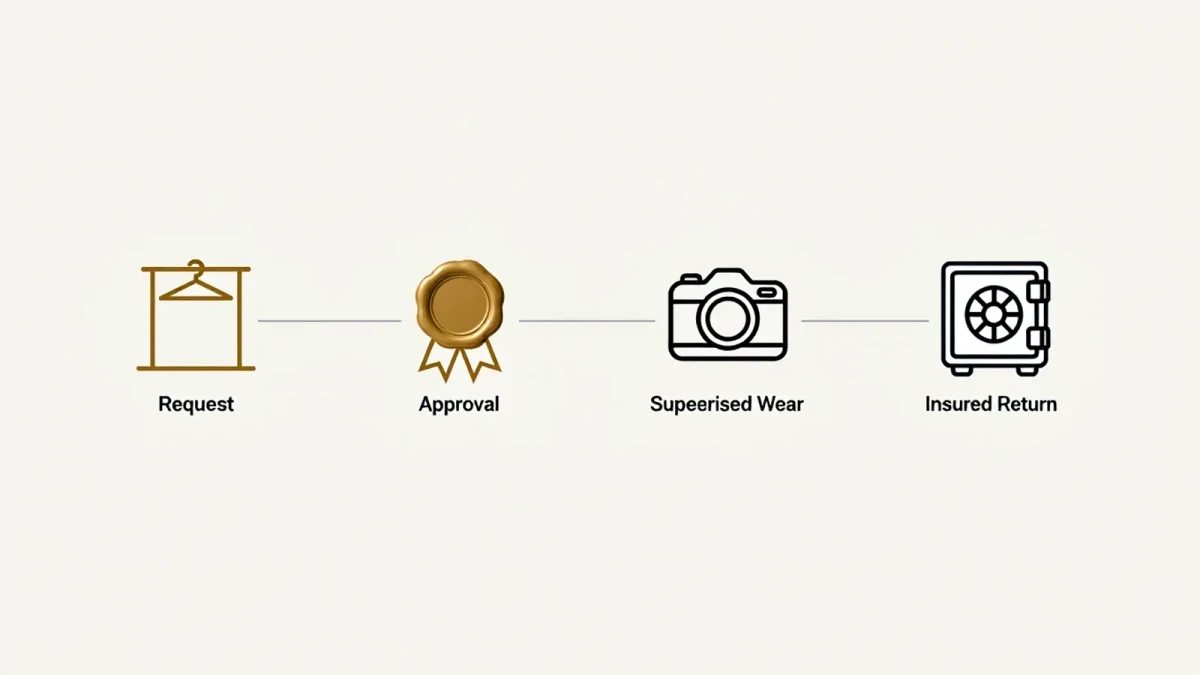
The house, throughout. A loan agreement transfers possession for a defined window — typically 24 to 72 hours around an event — with the piece logged, photographed and condition-reported at handoff and return. Wearing rights belong to one named person; substiting another wearer, even a co-star, breaches the agreement.
Some pieces never leave house control at all. When Beyoncé wore the 128.54-carat Tiffany Diamond for a 2021 campaign — the first time the stone had been worn in that setting since Audrey Hepburn's publicity era, per Tiffany's announcement, 2021 — the styling was a house production. Lady Gaga wearing it at the 2019 Academy Awards was likewise a controlled, insured house loan, per Tiffany's statements at the time.
How does a jewelry loan get requested and approved?
Stylists request, houses decide. A stylist submits the client, the event, the gown and the photograph plan; the house's celebrity services team vets the request against media profile, brand fit and competing loans. An A-lister presenting at a major ceremony gets first pick of the archive; a rising name may be offered entry-level pieces or nothing.
Approval is deliberately opaque because inventory is finite. One necklace can be promised to only one carpet per night, which is why headline jewels leap between cities and why a declined request can quietly decide who wears what hours before a premiere.
What does the insurance actually cover?
A short-term policy or a rider on the house's blanket fine-art and jewelry cover, written for the specific loan window. Premiums are priced against declared value, venue security, transport mode and handler count, with high-jewelry loans routinely insured into seven figures of value per event, per trade reporting on jewelry insurance practices, 2023. The policy names the wearer as a permitted user but not an insured party.
The rider list is where losses actually happen: damage during alteration of a gown around a set piece, stones lost during a quick change, cleaning mishaps. Contracts typically make the production or the client responsible for damage occurring inside their custody window — which is why publicists count stones at handoff with the house escort present.
How do the jewels travel?
Armored courier with a written chain of custody. Pieces move from the house vault to a hotel safe or a secured staging suite, with handoffs signed at each node and a security professional present whenever the jewelry is out of the safe. For festival circuits, houses ship in advance and hold pieces locally for the length of the event, per accounts of house celebrity-services operations in trade reporting, 2023.
The 2016 Paris robbery of Kim Kardashian, in which jewels worth roughly $10 million were taken from her residence during Fashion Week, per police figures reported at the time, 2016, reset the whole playbook: fewer location disclosures, security attached to the loan rather than the client, and stricter rules on social posts that reveal where pieces are sitting overnight.
Who pays when something goes wrong?
The insurance answers first, then the contracts fight over the remainder. If a piece is lost in a house-controlled handoff, the house's policy absorbs it. If it disappears in the client's custody, the loan agreement typically shifts liability to the client or their production — a clause that turns a lost earring into a seven-figure invoice for the person who wore it.
That liability shift is why management teams negotiate custody language hard before a loan closes. The house wants the star on the hook; the star's lawyers want custody defined as ending at the hotel safe. Where the signature lands decides who eats a loss that insurance disputes.
Are stars ever paid to wear jewelry?
Sometimes — but it is called an ambassadorship. A house paying directly for a single carpet appearance blurs into paid placement that disclosure rules capture, and most relationships are structured instead as multi-year ambassador contracts that include event wardrobe. The loan itself stays free on both sides, which keeps it legally clean and photographically credible.
The trade is exposure. An archive-level stone on a globally photographed shoulder functions as an advertisement the house could not buy as media, which is why the loan desk, not the ad budget, is the real gatekeeper of high jewelry's public face.
What happens after the carpet?
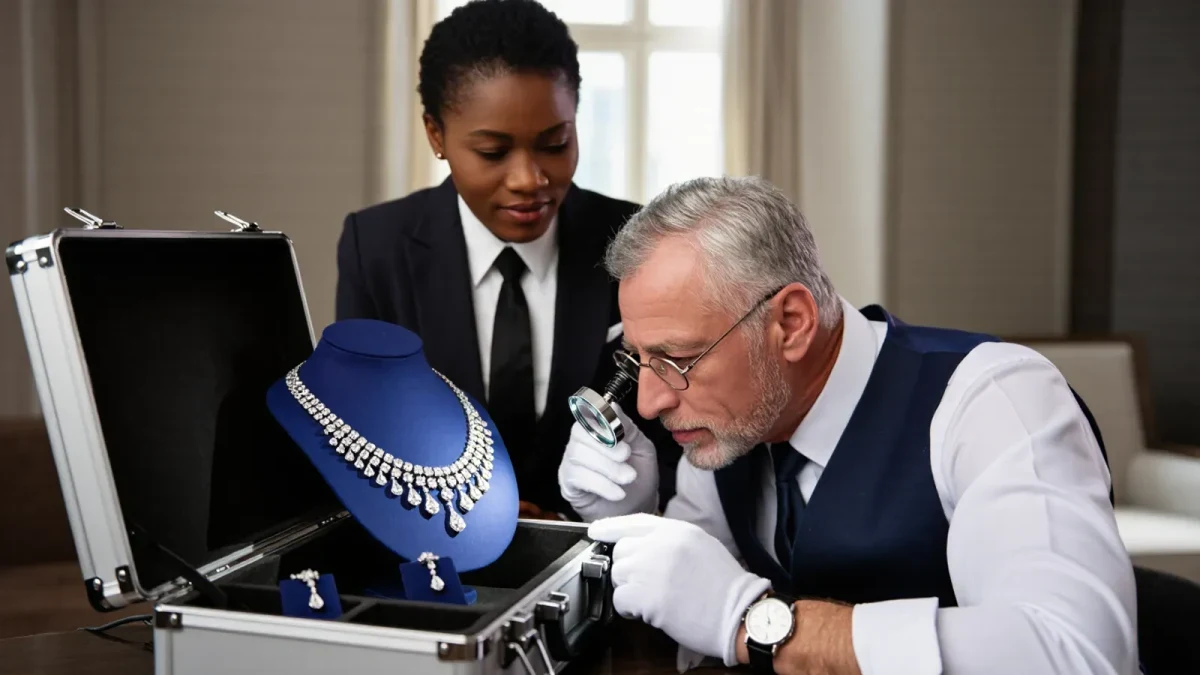
Return, inspection, release. The piece goes back to house custody the same night where possible, is condition-checked against the handoff report, and re-enters the vault or the exhibition calendar. Photos circulate for months afterward under the house's press office, which is the entire return on the loan.
Damage discovered at return triggers the dispute process: condition reports, third-party restoration quotes and, if the parties cannot agree, the insurance claim. Most losses settle quietly, because neither side wants the valuation of a one-of-a-kind jewel argued in public — the number is always bigger than the repair.
How do archives and estate pieces change the calculus?
Heritage jewelry carries history that new pieces do not, and that history cuts both ways. An archive piece arrives with documentation, a known provenance, and often a curatorial escort from the house, because the item is genuinely irreplaceable. Insurers price that difference: coverage for a one-of-a-kind historic piece reads more like fine-art transit policy than a standard loan rider.
For the star's team, the appeal is the story. A diamond with a documented public life gives the carpet a headline beyond the gown, and houses know their own archive is publicity no rival can rent. That is why estate and archive loans cluster around the biggest nights, where the risk premium is worth the photograph.
For the house, each loan is also conservation. Pieces travel in custom cases, ride with security rather than with the stylist, and go straight back to the vault after the last photograph. The carpet borrows the archive for an evening; the archive decides what it is willing to lend, which is a power balance the red carpet rarely gets to enjoy.