The money in an independent film goes to financiers recouping and talent deferrals; the money in a studio film goes to the studio's own departments — distribution fees, marketing overhead and participations — before anyone outside sees profit. The gap is measurable at the extremes: Paranormal Activity was produced for about $15,000 and grossed roughly $193 million worldwide, per figures reported by Paramount at the time; Avengers: Endgame opened to $1.2 billion globally in a single April 2019 weekend, per Disney's announcement. Two business models, both called movies.
The word 'independent' no longer means unsullied by capital — it means financed outside a major studio's balance sheet, whatever the money's origin. Everything downstream follows from that single distinction.
Who Funds Each Model — and What Do They Charge for It?
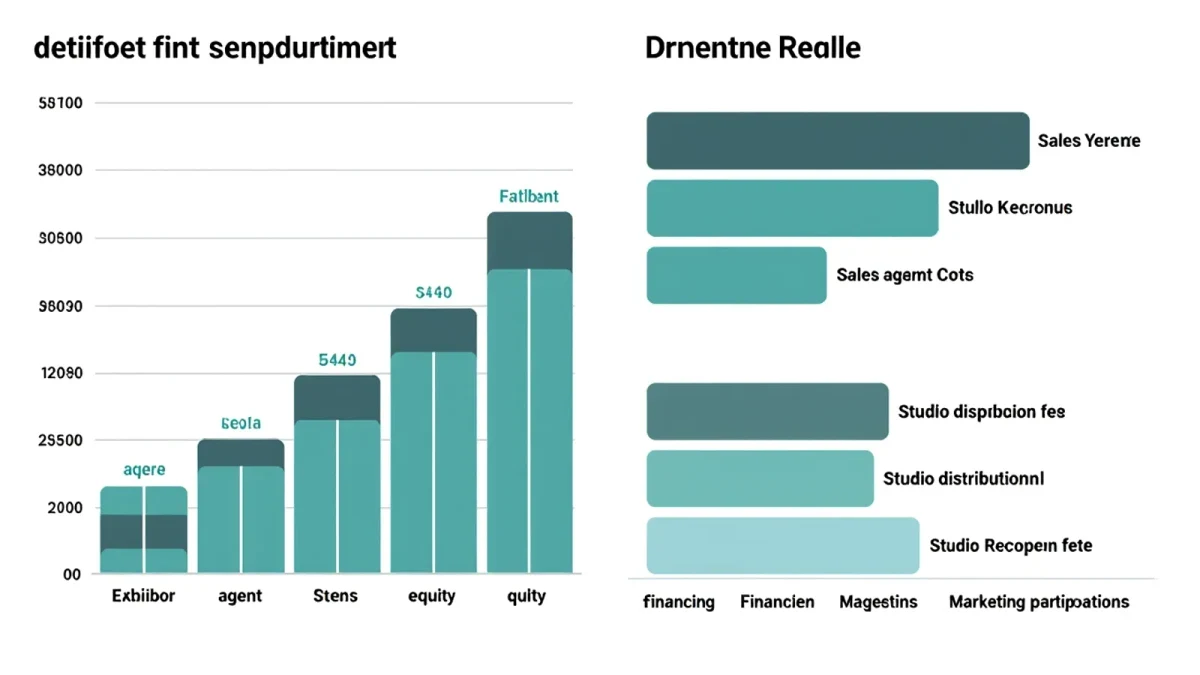
An independent film assembles other people's money: presales, rebates, gap debt, equity, each with a recoupment position and a premium. A studio film uses the corporation's own cash, charged internally with a distribution fee historically around 30 percent of gross — a toll the studio's distribution arm levies on the studio's film, per standard participation-accounting definitions that have surfaced repeatedly in profit-participation litigation.
That internal toll is the least understood asymmetry. The independent film pays real outsiders for real services; the studio film pays itself for services rendered by itself, converting one pocket's revenue into another pocket's cost. Both are legitimate accounting; only one of them moves money outside the building.
The independent stack's costs are different in kind: sales-agent commissions, completion bond fees, bank interest, rebate brokerage. Financiers' insurance, collectively — a tax on uncertainty that a self-funded studio never pays because its uncertainty is borne by shareholders silently.
Where Does the Revenue Land After Release?
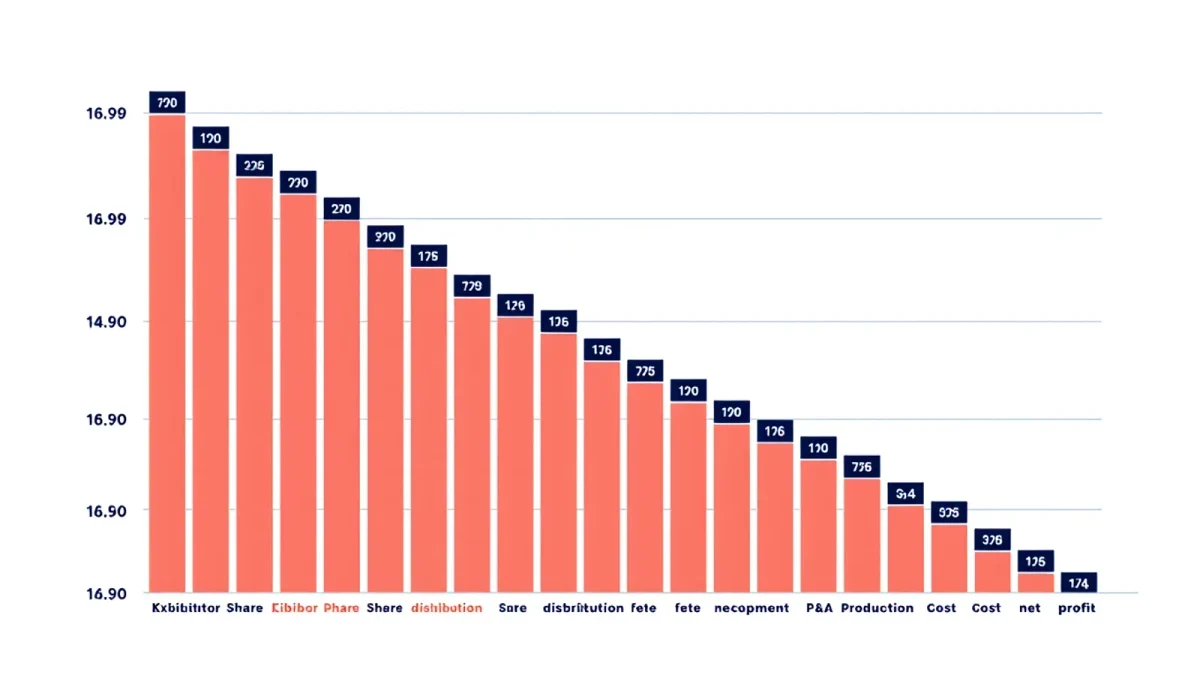
The independent waterfall pays outsiders in order — bank, bond, equity at a premium, deferrals — then profit participants divide what remains, if anything. The studio waterfall pays the studio first: distribution fee, then marketing recoupment, then production cost, then participations for those with the leverage to demand gross rather than net. Same gross dollars, radically different stops.
Territory strategy diverges accordingly. Independents sell country by country, each minimum guarantee a priced opinion; studios distribute through their own international networks and allied exhibitors, keeping the worldwide grid in one ledger. The independent model exports risk — a German distributor's advance is money regardless of Ohio's turnout — while the studio internalizes it, winning bigger on hits and losing bigger on misses.
Marketing spend separates the models most visibly in scale. An independent platform release builds on reviews and word of mouth, expanding screens as evidence accumulates; a studio wide release buys its opening weekend in advance with a campaign rivaling the film's cost. The independent prays for legs; the studio manufactures a landing strip.
Who Keeps the Upside When Something Hits?
The independent's arithmetic is brutal but legible: a micro-budget breakout can return multiples to its equity because the recoupment stack is short and the participants few. Get Out was produced for about $4.5 million and grossed roughly $255 million worldwide, per figures reported during its 2017 run — an outcome whose upside was divided among a compact circle, with the filmmakers' leverage permanently changed.
The studio hit's upside pools inside the corporation and its franchise apparatus: sequels, parks, consumer products, licensing — a revenue continent the independent cannot access because it sold the territories and the rights to fund the film. Blumhouse formalized the hybrid: micro-budget productions under a major-studio first-look umbrella, per the companies' long-running arrangement — studio distribution muscle, independent cost discipline, downside capped and upside contractual.
Streaming repriced the middle of this question. Platforms buying finished independent films paid one price and closed the waterfall; platforms making originals abolished it outright with cost-plus. The independent 'hit' now sometimes means a festival auction record — cash at closing, no tail — a definition of upside that would have bemused the 1990s financing era.
What Does Each Model Cost the People Making It?
Independents trade cash for ownership: deferred salaries, reduced quotes, backend of uncertain collectability — artists co-underwriting the green light. Studio films pay scale-plus reliably but own nothing: work for hire across the board, upside only through negotiated participations. Neither is generous; they are generous in different directions, at different times, to different ranks.
Career economics follow. The independent route builds proven versatility on lean sets and fast schedules; the studio route builds scale credits and quote leverage. The industry's conveyor — festival breakout to franchise installment to producing deal — exists precisely because the two models need each other: one to find the audience-validated material cheaply, the other to industrialize it.
Incentives quietly underwrite both tiers differently. A rebate on qualified spend returns the same percentage to a $200 million shoot and a $2 million one, but for the independent it is structural financing — borrowed against, discounted, load-bearing — while for the studio it is margin optimization. The same state program is a pillar in one model and a rounding entry in the other.
Which Model Is Healthier Now?
Wrong question; they are one system under two accounting regimes. The independent tier functions as the industry's research and development — subsidized now by equity chasing content, streamers buying finished films, and regional incentives — while the studio tier functions as monetization at scale. Each era shifts the border: the 2023 strikes and subsequent cost discipline squeezed the theatrical middle toward both extremes, per the pattern visible in the majors' subsequent slate disclosures.
The reader's diagnostic for any film's economics: find who advanced the production money, and you will find who gets paid first. Everything else — premieres, quotes, festival laurels — is set decoration around that single fact.