Media mergers get valued the way any corporate deal does — discounted cash flows, comparable-company multiples, and a synergy story — but with Hollywood's signature twist: the assets being valued are libraries and franchises whose future cash flows are guesses in costumes. Disney's $71.3 billion acquisition of much of 21st Century Fox closed in March 2019, per Disney's announcement; the deal that reshaped the modern studio map was, at bottom, an argument about what Fox's library and franchises would earn for decades. This explainer covers the mechanics; it is information, not investment advice.
The pattern to watch is the arc: premium at announcement, synergy targets in year one, impairment in year three. The arc is not destiny, but it has been the sector's most reliable plot.
What Are Buyers Actually Pricing in a Studio Deal?
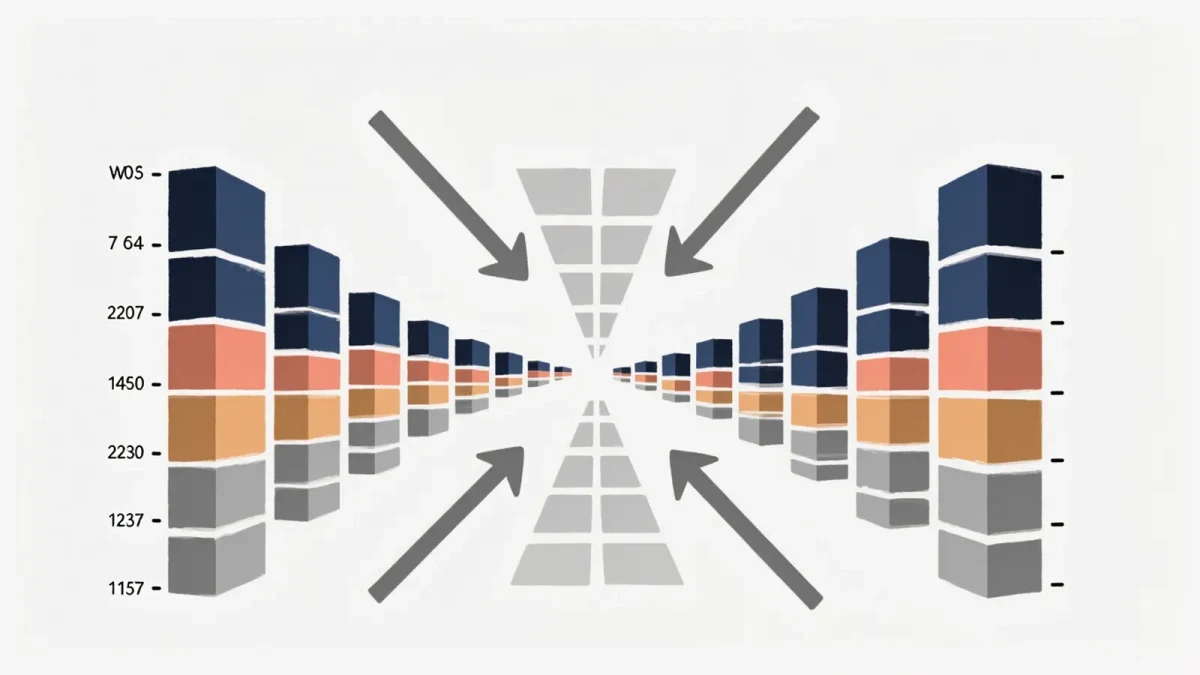
Four asset classes, each with its own math. The library: contracted and semi-predictable licensing revenue, valued closest to a bond. The franchises: sequels, parks integration, merchandise — the growth story, valued most optimistically. The pipeline: development slates and talent relationships, valued cautiously because most projects die. The infrastructure: lots, stages, distribution networks and the back office, valued on replacement cost or savings. When a buyer says 'strategic value,' it means the price cannot be justified by the first and last items alone.
What Is an EBITDA Multiple and Why Does Media Love It?
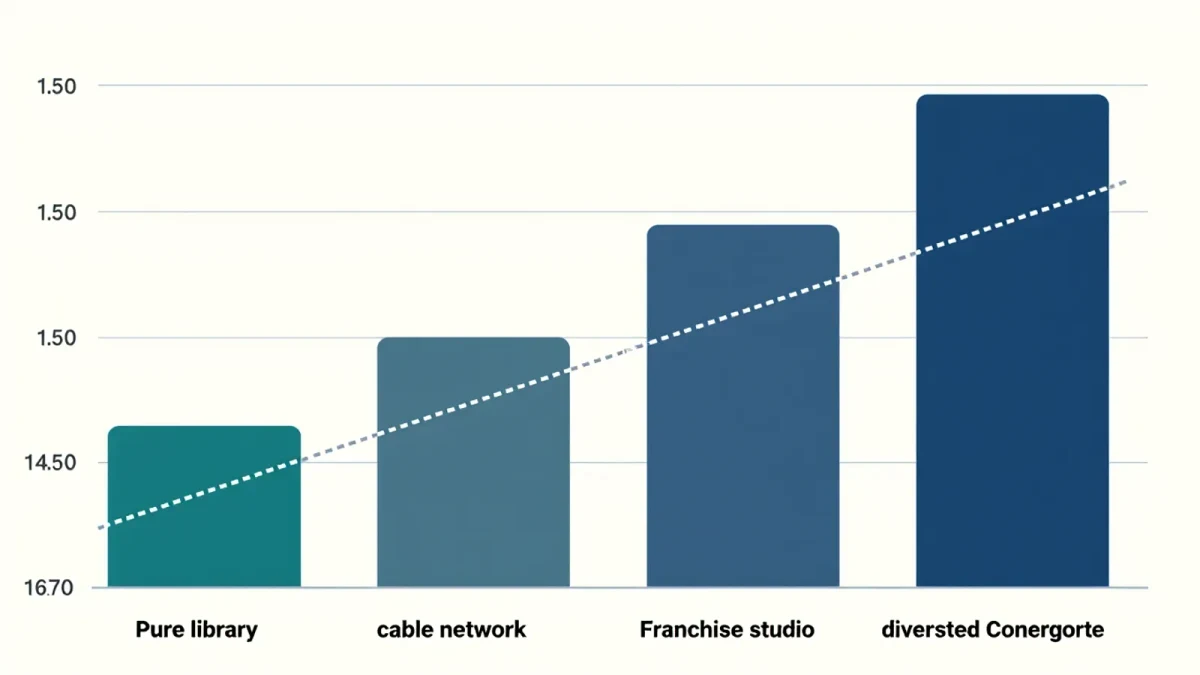
EBITDA — earnings before interest, taxes, depreciation and amortization — is a rough proxy for operating cash generation, and the multiple is what acquirers pay per dollar of it. Media companies carry heavy debt and heavy amortization of content costs, both of which distort plain earnings, so EBITDA multiples let bankers compare unlike balance sheets. Entertainment and cable assets have historically traded and transacted at double-digit multiples of EBITDA, with premier libraries at the top of the band; deal multiples are disclosed in the merger documents buyers and targets file. The multiple is where the negotiation actually happens.
What Are Synergies, and Why Are They Always in the Headline Number?
Synergies are costs the combined company will not have: duplicated corporate functions, two marketing departments becoming one, consolidated streaming tech. They are the acquirer's justification for paying a premium over the target's trading value — 'we overpaid versus the market, but we will extract the difference ourselves.' Synergy targets are stated in investor presentations and then tracked, publicly, in subsequent filings, which is what makes them checkable: a buyer promising two billion in savings has told you exactly what to audit in two years.
How Do Regulators Factor Into Deal Value?
As risk, priced into the spread. Antitrust review can delay, condition, or kill a transaction, and the market discounts the target's shares accordingly while approval pends. Amazon's $8.45 billion MGM acquisition closed in March 2022 after regulatory review, per the company's announcement. Concentration concerns, foreign ownership rules, and content-quota regimes abroad all lengthen timelines and can force divestitures — a studio buyer may end up valuing the company it gets, not the company it contracted for.
Why Do So Many Media Mergers Get Written Down Later?
Because the cash-flow projections underpinning the price were wrong, and accounting forces the confession. If acquired assets prove worth less than the price paid, the buyer impairs goodwill — the premium it recorded for intangibles — and books a charge. AT&T's entertainment adventure ended in a 2022 spin-off that merged WarnerMedia with Discovery, a combination the companies framed at roughly $43 billion of enterprise value, per their 2021 announcements, after the predecessor arrangement failed to earn its projected returns. The write-down is not new information; it is old optimism, restated.
How Did Recent Deals Illustrate the Mechanics?
Three ways. Disney-Fox priced franchises and a library at $71.3 billion, per Disney, 2019, and spent years integrating the assets into parks and streaming. Amazon-MGM priced a 4,000-film library and a franchise factory at $8.45 billion, per Amazon, 2022 — a fraction of the Fox number, showing how much of Disney's price was strategic franchise premium rather than catalog value. Skydance completed its merger with Paramount Global in August 2025, per the companies' announcement, a structure closer to a controlled recapitalization than a straight auction — reminding the town that deal architecture matters as much as deal size.
What Is the Difference Between Equity Value and Enterprise Value?
Equity value is what the shareholders' stock is worth; enterprise value adds the debt the company carries and subtracts cash. Media targets are frequently debt-heavy — which is why a deal announced as an $X equity purchase can obligate the buyer to a much larger capital structure. When trade coverage says a studio sold 'including debt,' that is enterprise value talking. Comparing deals without fixing which value is being cited is the most common error in merger coverage, amateur and professional alike.
Who Gets Paid What When a Studio Is Sold?
In strict order. Advisors and bankers first, from deal fees. Debt holders at par or near it, because the acquisition or refinancing retires their claims. Preferred and controlling shareholders on their negotiated terms — the Skydance-Paramount structure, per the 2024-2025 announcements, treated controlling and ordinary shareholders differently, a point extensively litigated in public. Common shareholders last, at the merger price. The order explains most merger fights: everyone is arguing about position in a queue that the documents define precisely.
A merger announcement is a forecast with a press kit. The impairment announcement, years later, is the audit.
FAQ
How do analysts value a movie studio acquisition?
Discounted projected cash flows across the library, franchises, pipeline, and infrastructure, cross-checked against EBITDA multiples paid for comparable media assets. Disney-Fox at $71.3 billion, per Disney's 2019 announcement, versus Amazon-MGM at $8.45 billion, per Amazon's 2022 announcement, shows how franchise premium drives the spread between similar-sounding deals.
What are synergies in a media merger?
Costs the combined company eliminates — duplicated corporate functions, consolidated marketing, unified streaming technology. Buyers use promised synergies to justify premiums, and because targets are stated in investor materials and tracked in filings, they are the single most auditable claim in any deal presentation.
Why do acquirers pay a premium over the market price?
Because control is worth money: the buyer believes it can run the assets better or extract synergies the market would not credit. The premium is the bet; the synergy plan is the collateral. If the plan misses, the premium becomes goodwill, and goodwill eventually gets impaired.
What is a write-down after a merger?
An admission that the price exceeded the value received. When projected cash flows fall short, accounting rules require the buyer to reduce recorded goodwill and book the loss. The 2022 WarnerMedia-Discovery combination, per the companies' announcements, followed a predecessor arrangement that had already failed its own projections.
Do regulators ever block media mergers?
They delay, condition, and occasionally block. Antitrust review assesses concentration in defined markets, and approvals can carry divestiture requirements. Amazon-MGM cleared review and closed in March 2022, per the company; other combinations have spent a year or more in review before closing on modified terms.